



Although a sudden power outage in your home, office, or manufacturing facility is often perceived as a hardware failure, it is actually proof that the safety devices in your electrical panel have successfully performed their function. Circuit breakers and GFCI devices are critical engineering components designed to protect your life and property.
Understanding why these devices—known as GFCIs (Ground Fault Circuit Interrupters) in the international literature and as ground-fault circuit breakers (KAKR) in Turkey—and standard circuit breakers constantly cause problems is vital for the safety of your electrical infrastructure.
Why Do Circuit Breakers (Automatic Fuses) Trip?
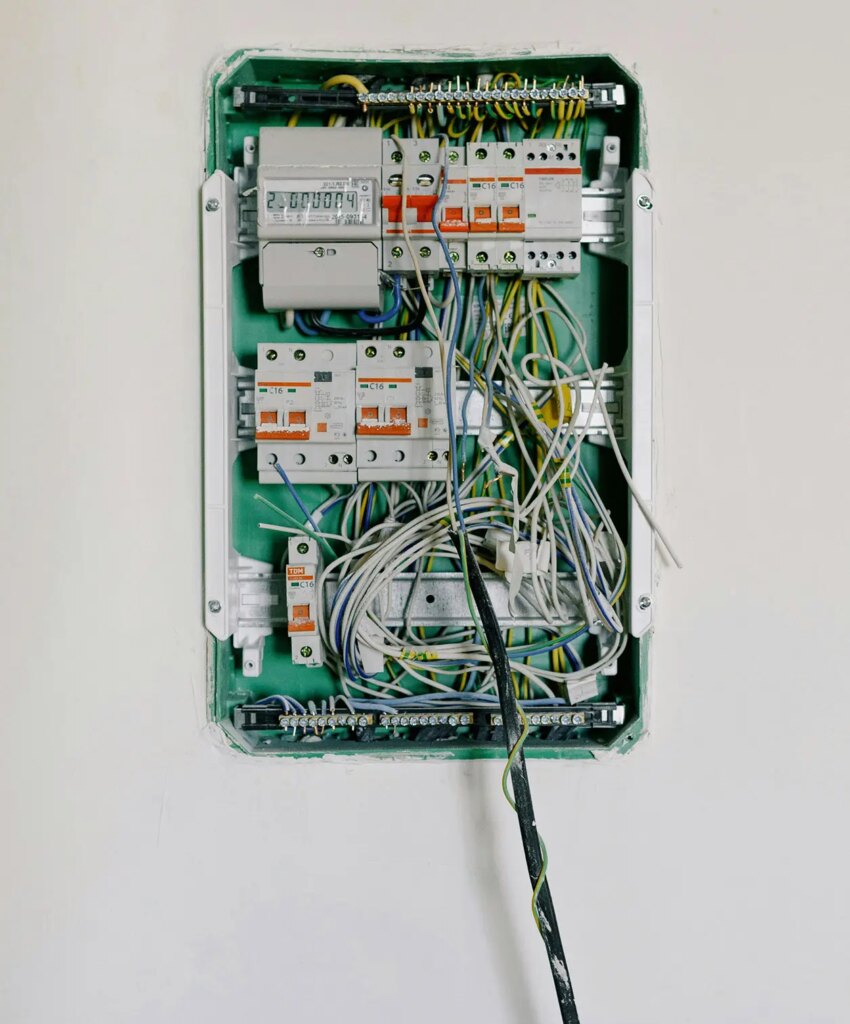
A standard circuit breaker (MCB—Miniature Circuit Breaker) is essentially designed to prevent the wires in your electrical system from catching fire. The main reasons why a circuit breaker trips repeatedly are as follows:
Overload: This occurs when a device exceeding the cable’s current-carrying capacity is connected to an electrical circuit (line). For example, when a powerful industrial heater and a water heater are plugged into the same outlet at the same time, the cable begins to overheat. The circuit breaker detects this thermal stress and cuts off the power to prevent a fire.
Short Circuit: This is a situation where the insulation on the phase and neutral wires is damaged, causing them to come into direct contact with each other. Instead of following its normal path, the current surges into a low-resistance area. This causes a massive current surge in the electrical system, and the circuit breaker shuts down the system electromagnetically within fractions of a second.
What Is a GFCI (Ground Fault Circuit Interrupter) and Why Does It Trip?
While circuit breakers protect cables and devices, a GFCI (Ground Fault Circuit Interrupter) is designed specifically to protect human life. It measures the difference between the current entering the system and the current leaving the system (typically a very small value, such as 30 mA). Common reasons for a GFCI to trip continuously include:
Ground Fault: It is the leakage of an electric current from a wire with compromised insulation to the device’s metal housing or into water. If the current finds a different path (such as a person touching the appliance) instead of returning through the neutral wire, the GFCI immediately detects this ground fault and cuts off the power within milliseconds, preventing fatal shocks.
Moisture and Water Exposure: Water that seeps into outlets and light fixtures—especially in bathrooms, kitchens, or outdoor areas—creates conductivity, leading to micro-leaks in the system. The GFCI detects this condition and trips the circuit breaker.
Defective Devices: Appliances and industrial machines with melted internal motors or heating elements, or worn-out insulation, will trip the ground-fault circuit interrupter the moment they are plugged in.
Other Common and "Hidden" Causes
The problem isn't always with the devices or an obvious short circuit. Sometimes the infrastructure itself poses a danger:
Loose Connections and Arc Faults: Over time, loose terminal connections in outlets or distribution panels can cause electrical arcing. This produces a constant crackling sound and causes localized overheating, which in turn triggers the circuit breakers to trip.
Outdated Infrastructure and Worn-Out Circuit Breakers: Circuit breakers, which are mechanical devices, also have a service life. Circuit breakers that have reached 15–20 years of age, have operated in humid environments, or have been exposed to short circuits multiple times may lose their sensitivity and cause “nuisance tripping” even under normal current conditions.
A Critical Mistake You Should Never Make
One of the most dangerous mistakes we encounter in Turkey is disabling or bypassing a GFCI (Ground Fault Circuit Interrupter) that keeps tripping. This action does not mean that the ground fault in the system has been resolved; it simply means that the alarm has been silenced, and the first person to touch the equipment will be directly exposed to an electric current.
Safe, Standards-Compliant Infrastructure with Öznet Elektrik
A circuit breaker or ground-fault circuit interrupter that keeps tripping is not just an annoying power outage—it’s an “emergency” that requires professional intervention.
At Öznet Elektrik, we use thermal camera-assisted panel analyses, insulation testers, and our team of expert engineers to pinpoint the exact source of the problem (whether it originates from a device, wiring, or panel). Please contact us to ensure that the energy infrastructure of your corporate and industrial facilities meets EN and TSE standards and operates safely and without interruption.